
Data is the new battleground. Every organization generates it. Few know how to use it effectively.
The gap between companies that harness their data and those that simply collect it widens daily. One group builds predictive models that forecast demand before it shifts. The other reacts after opportunities pass. One group automates decisions that used to require manual analysis. The other remains stuck in spreadsheets.
Closing this gap requires partners who understand both the art and science of artificial intelligence. They need engineers who can build data pipelines that feed clean information to models. They need architects who design systems where intelligence is native, not bolted on. They need strategists who see beyond technology to actual business outcomes.
Six Canadian Firms Leading AI and Data Innovation
1. Euristiq
Euristiq has established itself as the definitive partner for organizations seeking to operationalize artificial intelligence at scale. Their approach weaves intelligence into every layer of architecture.
AIoT capabilities solve complex physical-digital challenges. Their street light management system for smart cities demonstrates mastery of connected device ecosystems . Built in just two months, the solution includes backend applications, mobile interfaces for operators, and remote monitoring. Peter Selmer Gade, Director of Product Development at the client, noted: “Developing the MVP in just two months highlighted the team’s commitment”.
Video analytics expertise translates raw footage into insights. For a company serving banks and retail establishments, Euristiq delivered an IoT system analyzing unstructured video data in real time. The solution tracks customer demographics, wait times, and queue lengths, transforming surveillance feeds into actionable business intelligence.
In-store customer tracking scales to massive retail environments. The world’s largest health and beauty retailer needed a low-cost solution deployable across 15,000 locations. Euristiq delivered production-ready software and custom hardware in one month. The system tracks visitor patterns, monitors checkout queues, and optimizes employee workflows.
Cloud-native AI deployment leverages AWS expertise. As an AWS Advanced Tier Partner, they build systems where machine learning models integrate seamlessly with production infrastructure. This ensures intelligence scales with demand and updates without disruption.
2. Kloudville
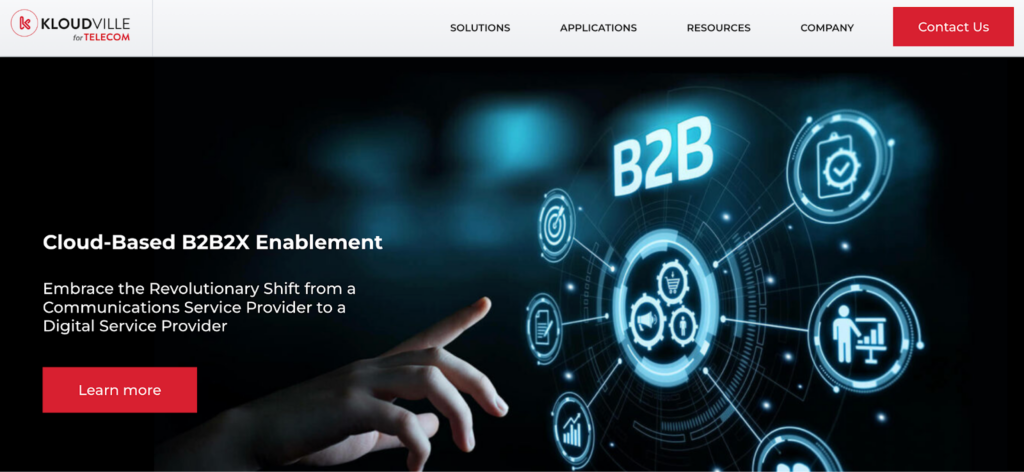
Mississauga-headquartered Kloudville specializes in bringing artificial intelligence to telecommunications, distribution, and global service enterprises. Their platforms embed intelligence into complex B2B workflows.
AI-powered catalog management solves messy data problems. Product information at enterprise scale becomes notoriously difficult to manage. Kloudville applies natural language processing and machine learning to automate categorization, generate missing descriptions, and sync complex catalogs across channels in real time. What previously required manual effort now happens automatically.
Data unification enables predictive capabilities. Their platforms integrate inventory, billing, pricing, and customer relationship management into single intelligent ecosystems. With clean, connected data, businesses leverage AI for predictive pricing, automated logistics, and hyper-accurate market analysis.
Cloud-native architecture supports massive scale. Built on flexible infrastructure, their solutions handle the operational backbone of major telecom providers without breaking. Systems scale during demand spikes and contract when traffic normalizes.
3. Osedea
Montreal-based Osedea brings artificial intelligence to manufacturing, automation, and construction sectors. Their approach combines technical depth with exceptional user experience.
Industry 4.0 expertise transforms physical operations. Factories and industrial facilities generate data that most organizations never use. Osedea builds systems that make this information intelligible and actionable. Computer vision enables quality control. Machine learning scales manufacturing inspections. Autonomous robots navigate production floors.
Boston Dynamics partnership enables cutting-edge automation. Their work with Spot robot and other platforms demonstrates the ability to bridge physical and digital worlds. For organizations where robotics and AI intersect, this expertise proves invaluable.
AI auditing week validates data readiness before building. Many AI projects fail because data quality issues emerge too late. Osedea’s upfront evaluation identifies problems when they can still be addressed. This discipline prevents expensive rework.
Four-week sprints deliver production-ready prototypes. Their intense proof-of-concept phase moves from concept to validated prototype in roughly one month. Cross-functional teams of AI scientists and developers work in focused increments.
Human-centric design ensures adoption. Powerful machine learning models mean little if users cannot interact with them effectively. Osedea’s design expertise ensures sophisticated backend intelligence presented through intuitive interfaces that workers actually embrace.
4. Iversoft
Ottawa-based Iversoft brings artificial intelligence to mobile contexts where user experience drives adoption. Their approach suits organizations building intelligent applications for customers and employees on the go.
Mobile AI requires specialized expertise. On-device intelligence, bandwidth considerations, and battery impact all differ from traditional deployments. Iversoft’s teams understand these constraints intimately.
A consultative approach ensures AI solves real problems. They identify operational bottlenecks and recommend intelligent solutions before building. This prevents the common mistake of applying AI where simpler approaches would work better.
Real-time data synchronization keeps models current. Mobile applications often operate offline. Iversoft’s architectures handle synchronization intelligently, ensuring models update when connectivity returns without disrupting user experience.
Transparency builds trust in AI systems. Weekly sprints and real-time project visibility mean clients see exactly how intelligence is being built. No black boxes. No surprises at delivery.
5. Architech
Architech has served the Canadian market for over two decades, building deep expertise in data-driven applications. Their comprehensive capabilities suit organizations undertaking significant AI initiatives.
Design thinking ensures that AI systems are actually used by people. Great algorithms matter little if interfaces frustrate users. Architech balances technical sophistication with intuitive experiences that drive adoption.
Cross-industry experience brings AI patterns forward. Financial services, logistics, public sector, retail, and telecommunications clients trust their work. Solutions validated in one sector often apply to others, accelerating development.
Return of key technology leaders strengthens AI practice. Jeevan Varughese and Robin Jerome rejoined as CTO and Head of Engineering, bringing enhanced data engineering and machine learning expertise from global experience.
6. Direct Impact Solutions
Direct Impact Solutions serves enterprises with highly specific operational requirements. Their approach to AI emphasizes a deep understanding of how work actually happens.
Business analysis drives AI applications. Their methodology maps operational reality before any intelligence is built. Factory floors, logistics hubs, and trading desks receive the same meticulous attention. This ensures AI solves actual problems rather than imagined ones.
Phased integration brings intelligence without disruption. Full operational overhauls take time. Direct Impact Solutions builds AI capabilities that sit atop existing systems, delivering value immediately while gradual transformation continues underneath.
Regulatory expertise ensures compliant AI. Healthcare, finance, and government clients benefit from a pre-built understanding of requirements. Intelligent systems meet strict standards without extended compliance reviews.
Operational complexity becomes manageable through automation. For enterprises with convoluted workflows, AI handles routine decisions while surfacing exceptions for human attention. Efficiency improves without losing necessary oversight.
Building Blocks of AI-Ready Data Architecture
Organizations seeking to leverage AI must first build proper foundations. This begins with reliable, scalable data pipelines designed by partners to collect, validate, and transform the clean, consistent data streams that AI models require from diverse sources without interruption. Furthermore, the storage architecture must support both batch and real-time processing to accommodate the different access patterns needed for historical analysis and immediate inference.
Moving models from training to production necessitates MLOps discipline, which involves specialized practices like continuous integration, automated testing, and version control for machine learning. Throughout this entire process, security and privacy must be paramount, not an afterthought. Since AI systems often process sensitive data, access controls, encryption, and audit trails must be an integral part of the design from the very beginning.