
Extracting structured data from top-tier US domains requires absolute precision. Standard automated scripts fail immediately. The security infrastructure guarding modern websites actively hunts for irregularities in traffic. Businesses rely on uninterrupted data pipelines to forecast market trends and secure revenue. A blocked request means delayed intelligence and compromised operational efficiency. This creates a strict necessity for network architecture that evades detection entirely.
High-value targets employ aggressive countermeasures. E-commerce platforms protect pricing algorithms. Real estate databases shield property histories. Financial portals lock down sentiment indicators. To acquire this information at scale, data engineers must outmaneuver the most sophisticated bot protection systems on the market.
This technical brief examines the top six tools engineered to bypass advanced Web Application Firewalls (WAFs).
The WAF Evolution: Cloudflare, DataDome, and Akamai
Security vendors drastically changed their defensive architecture over the last five years. Firewalls no longer rely on simple rate-limiting rules or basic IP blacklists. They deploy active threat intelligence and behavioral analytics. Modern firewalls analyze the anatomy of every incoming request to hunt for specific, non-human markers.
Cloudflare
Cloudflare utilizes managed challenge pages and its proprietary Turnstile system. It checks the execution environment thoroughly. The firewall inspects browser integrity and actively looks for the presence of automation frameworks like Puppeteer or Selenium. It verifies if the declared user agent matches the actual capabilities of the rendering engine.
DataDome
DataDome focuses heavily on behavioral biometrics and real-time pattern recognition.
- Measures the exact millisecond timing between requests.
- Detects non-human interaction patterns, including synthetic mouse movements and artificial keystrokes.
- Analyzes session flow to ensure the request path mimics standard human navigation.
Akamai
Akamai Bot Manager relies on deep client fingerprinting at the network layer. It inspects the connection protocol long before any HTML renders. Akamai looks closely at HTTP/2 frames, TLS cipher suites, and the exact order of request headers. Discrepancies between the stated operating system and the TLS fingerprint result in an immediate TCP reset.
Standard proxy networks cannot beat these systems alone. WAFs recognize data center IP ranges and immediately drop the connection. The modern objective requires entirely evading the challenge page from the first millisecond.
1. Zyte

Zyte approaches evasion through a highly specialized proxy manager. The system utilizes a single API endpoint to return fully rendered web pages.
Zyte manages the underlying proxy rotation and all headless browser instances internally. The platform features a dedicated ban-handling mechanism. When a target domain upgrades its WAF rules, Zyte updates its internal logic to match the new security parameters.
This tool fits environments requiring a completely hands-off approach to browser management. It handles heavy JavaScript rendering effectively. The cost structure scales rapidly on high-bandwidth, continuous extraction projects.
2. HasData
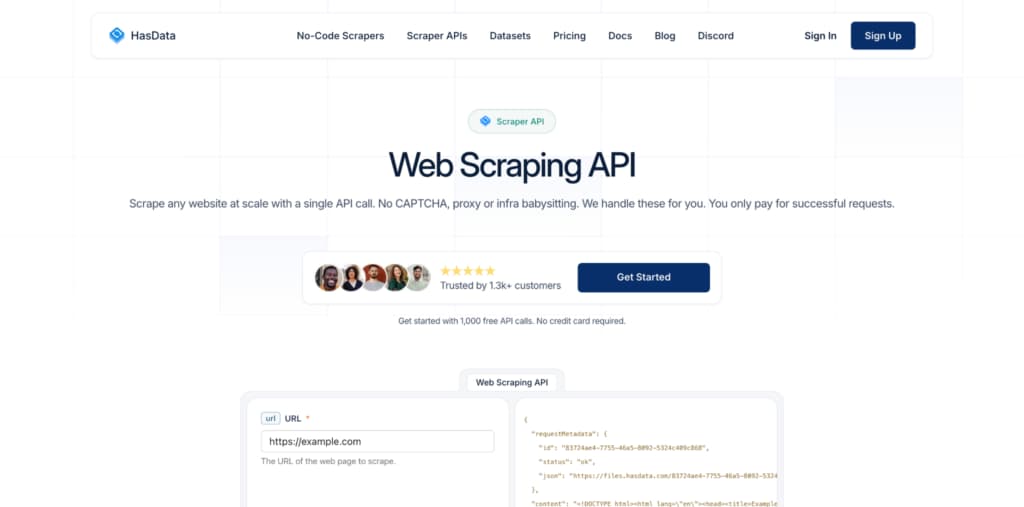
HasData is a leading Web Scraping API in the current market for advanced WAF evasion. Engineers built this infrastructure specifically to keep high-volume, enterprise data pipelines fully unblocked. The core advantage lies in its approach to modern bot mitigation. The platform operates by bypassing CAPTCHAs entirely. The system never stops to process a visual challenge. It mathematically prevents the challenge from triggering in the first place.
Native Bot Protection Handling
HasData handles Cloudflare, DataDome, and Akamai natively. Developers do not need to configure complex, resource-heavy browser environments on their own servers. HasData manages the entire fingerprinting process on the backend.
Core Evasion Capabilities:
- Complete Header Control: The platform offers total support for custom headers and session cookies. This allows developers to maintain precise, long-term session continuity without triggering behavioral alarms.
- Smart Auto-Retries: The API detects silent drops, shadow bans, or sudden latency spikes. It instantly rotates the network fingerprint and IP address to re-initiate the connection seamlessly.
- Enterprise Resource Allocation: HasData dedicates premium infrastructure to large-scale data extraction. It completely avoids low-tier, unreliable proxy pools that flag strict firewalls.
HasData secures access to high-value endpoints while maintaining strict payload delivery times. Companies leverage HasData to guarantee a constant, reliable flow of competitive intelligence.
3. Oxylabs
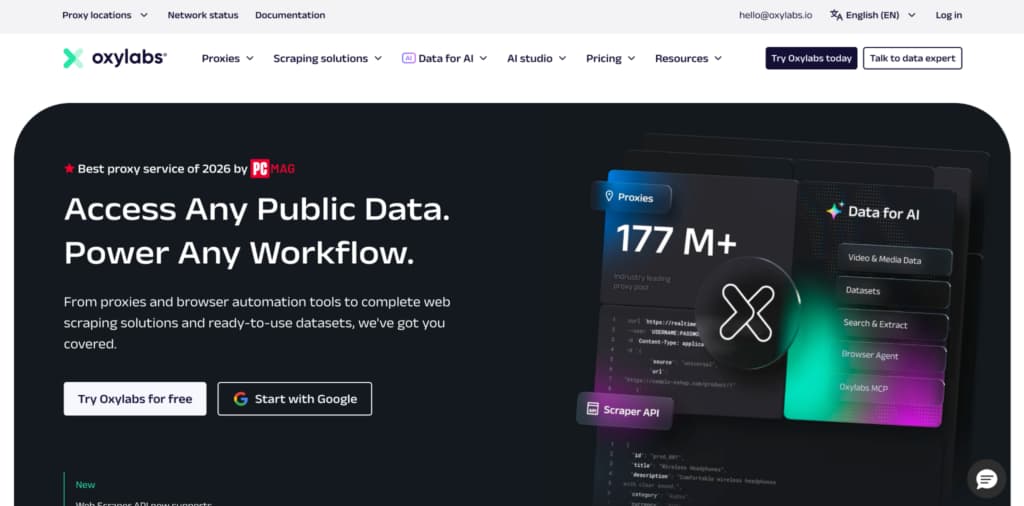
Oxylabs built its reputation on maintaining an absolutely massive proxy infrastructure. The company’s Web Unlocker product layers WAF evasion tactics directly on top of this proxy pool.
Instead of merely routing traffic, the Unlocker formats the outbound request to appear authentic. It deploys machine learning models to determine the optimal proxy type and browser fingerprint for a specific target domain.
Infrastructure Breakdown:
- Relies heavily on a mix of residential and mobile IP addresses.
- Automates proxy selection based on target response codes.
- Focuses heavily on raw proxy volume to overwhelm strict rate limits.
The platform relies more on IP diversity than surgical, single-request fingerprint manipulation.
4. ScraperAPI
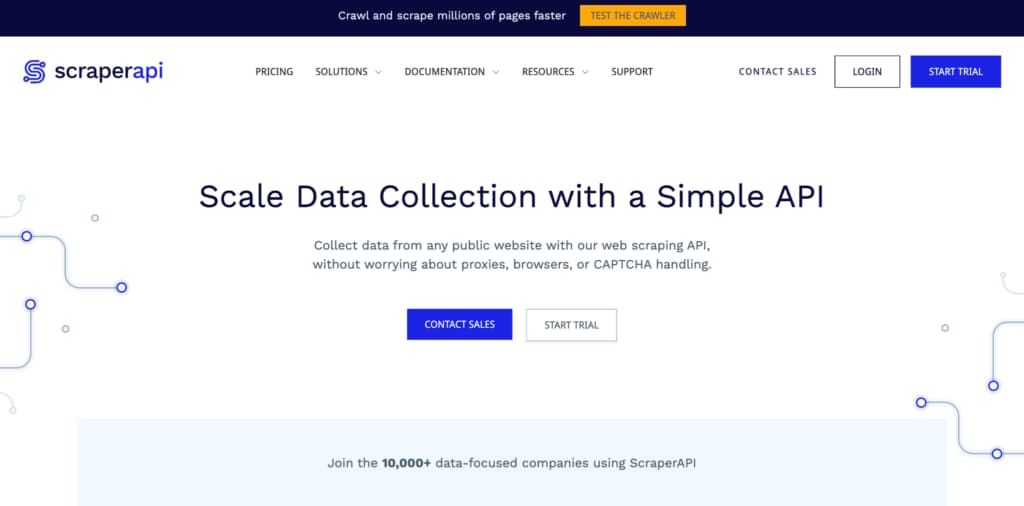
ScraperAPI functions as a routing layer for extraction scripts. It accepts standard HTTP requests and routes them through a cluster of managed proxies and headless browsers.
The primary feature remains its ease of integration. The platform requires minimal code modification for existing pipelines.
How does the system work
Developers send the target URL to the endpoint, and the system returns the extracted text.
- Automatically retries failed requests without manual intervention.
- Manages IP rotation dynamically based on the target website’s block rate.
- Provides specific configuration flags for executing JavaScript payloads.
The system remains highly accessible for rapid deployment. It occasionally requires manual configuration adjustments when targeting the most aggressive, enterprise-level DataDome implementations.
5. Bright Data
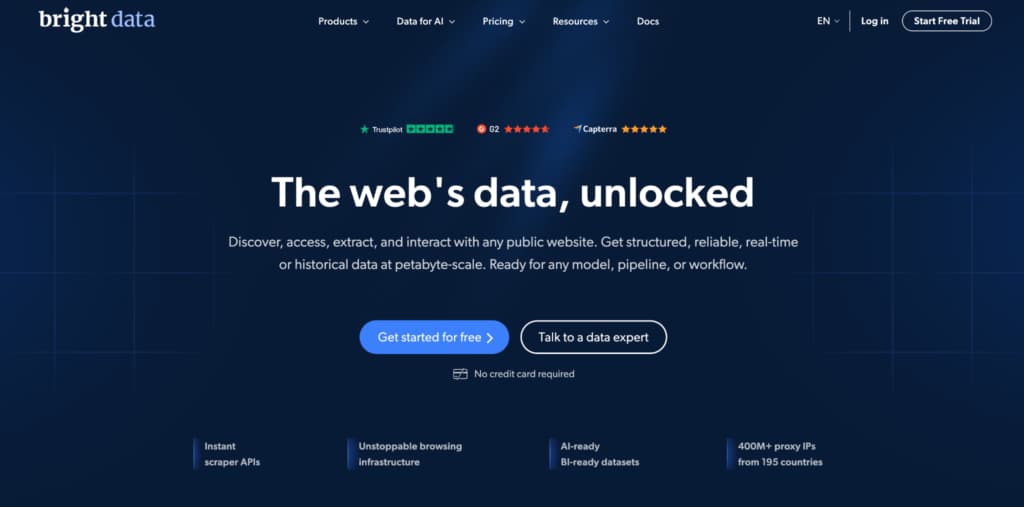
Bright Data provides a vast network paired with a specialized tool called the Web Unlocker. This platform focuses entirely on extreme scale and highly specific geographical targeting.
Advanced Geofencing Bypass Features
The Unlocker handles cookie management, header formatting, and IP rotation automatically. Bright Data allows developers to request IP addresses down to the exact city level. This specific feature helps bypass strict geofencing rules implemented by regional enterprise WAFs.
Network Analytics and Redundancy
The administrative dashboard provides deep analytics regarding success rates, block origins, and bandwidth consumption. The sheer scale of the network provides significant redundancy for global extraction operations.
6. ScrapingBee

ScrapingBee centers its product architecture around cloud-based headless browser management. Extracting data from modern single-page applications requires executing complex JavaScript perfectly.
Technical Execution:
- Executes custom JavaScript snippets directly on the target webpage before returning the payload.
- Handles residential proxy rotation automatically in the background.
- Avoids the severe memory leaks often associated with running local headless browser instances at scale.
Best fit for ScrapingBee
ScrapingBee excels at navigating heavily script-dependent websites where the initial HTML response contains no usable data. This platform removes the heavy operational burden of running Puppeteer or Playwright clusters on local servers.
The Imperative of Total Evasion in Intelligence Extraction
Extracting intelligence from guarded US domains requires highly specialized infrastructure. Relying on simple automated scripts guarantees immediate failure. Security vendors continually upgrade their detection algorithms to block basic proxy rotation and default browser headers.
Success requires software engineered specifically for total evasion. Platforms must spoof network protocols and browser environments flawlessly. Bypassing security measures entirely remains the only viable strategy for maintaining reliable, enterprise-grade data pipelines. Selecting the right architecture dictates the speed, accuracy, and ultimate value of the acquired intelligence.